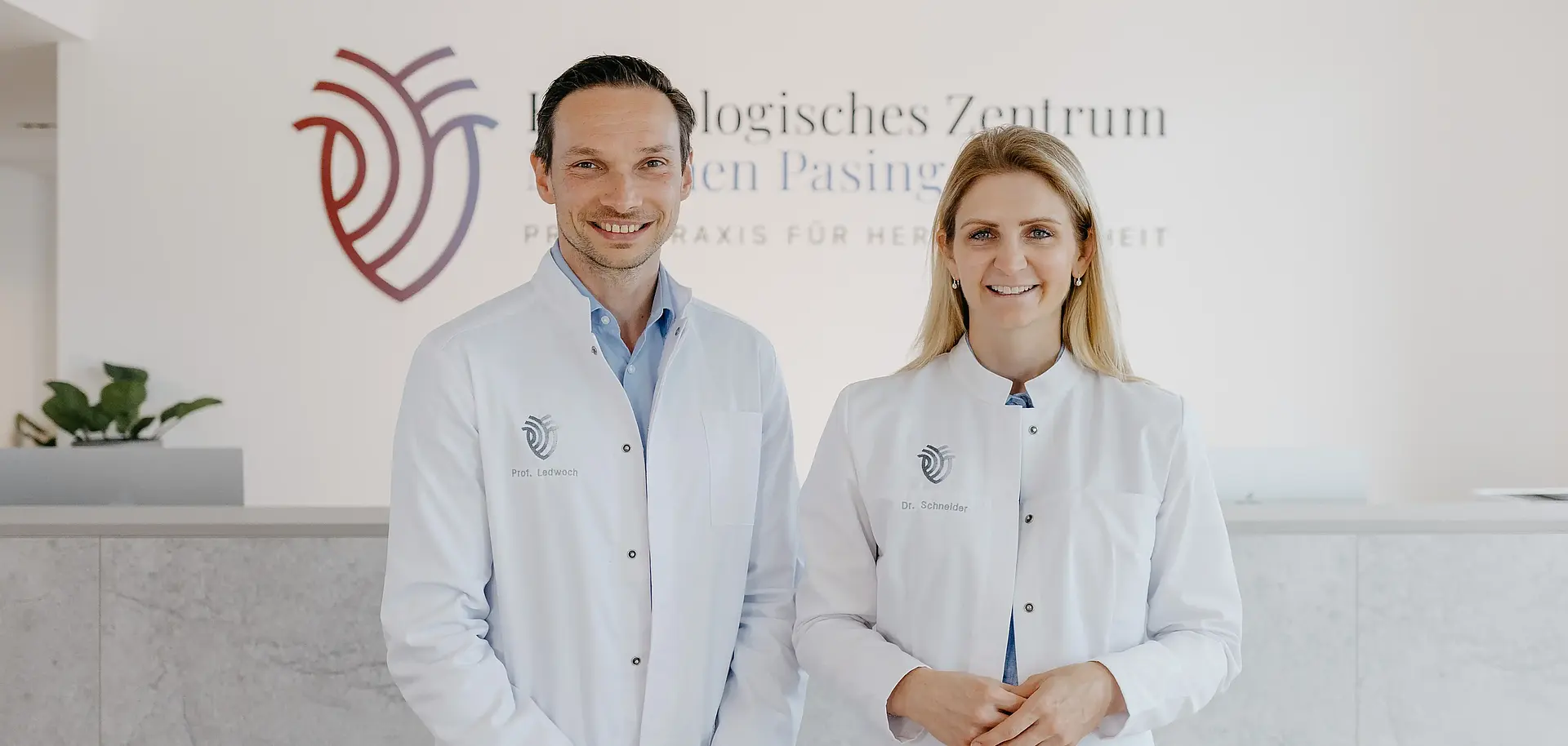

Dr. Vera Schneider is a cardiologist with a strong academic background and a particular focus on holistic, patient-centred cardiology. She studied medicine at the renowned Ludwig Maximilian University of Munich, where she realised early on that excellent medicine is built not only on expertise, but equally on empathy and individual care. While still a student, she completed her doctorate on heart valve disease. Her specialist training took her to two of Germany’s leading university hospitals – the Charité in Berlin and the Technical University of Munich.
With further training in sports cardiology and cardiovascular prevention, she gives her patients evidence-based advice that fits into everyday life – from exercise and training to nutrition and lifestyle.
Her studies in gender-specific medicine at the University of Zurich have also given her a qualification in women’s heart health that is still rare in Germany. She is a sought-after expert, particularly on hormonal changes, the menopause and atypical symptoms in women.

Prof. Dr. Jakob Ledwoch studied medicine at Goethe University Frankfurt, where he laid the foundation for his clinical and scientific career. Prof. Dr. Ledwoch completed his specialist training at several major centres, including München Klinik, the University Heart Centre Lübeck and the Technical University of Munich. There he developed particular expertise in interventional cardiology, cardiovascular imaging and the modern treatment of heart failure. After his specialist training, he worked as a consultant at München Klinik and as lead consultant and head of telemedicine at the Isarklinik.
His research led to his habilitation (the German postdoctoral qualification for professorship) at the Technical University of Munich. In recognition of his clinical and academic achievements, he was appointed Professor of Cardiology. This appointment reflects his commitment to advancing cardiology through research and innovation.
Prof. Dr. Ledwoch has a particular focus on cardiovascular prevention and longevity. His approach is based on the conviction that it is better not to wait until disease develops, but to identify risks early and prevent cardiovascular disease in the long term.