

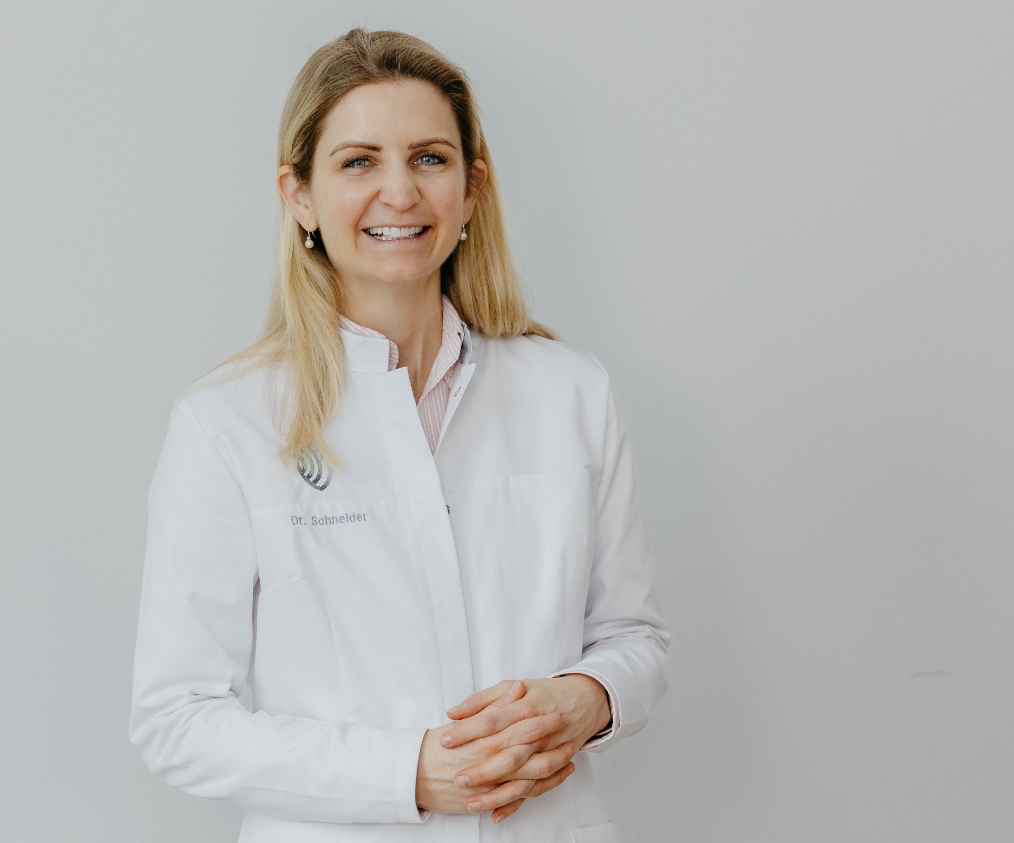
Mein Ziel ist, dass Sie sich medizinisch bestens betreut und persönlich gut aufgehoben fühlen - mit einem freundlichen Team, einer angenehmen Praxisatmosphäre und dem Gefühl, dass Ihr Anliegen ernst genommen wird.


Half of all people who suffer a heart attack had no prior warning signs.
Assessing raised cholesterol early can help prevent this. At the Cardiology Centre Munich-Pasing, we never look at cholesterol in isolation, but always in the context of your blood vessels, your metabolism and your individual overall risk.
Raised cholesterol causes cholesterol particles to be deposited in the vessel wall, forming plaques. The danger is that people feel healthy for a long time. Symptoms, heart attacks or strokes only occur once the vessels are severely narrowed or plaques become unstable.
What matters is not the cholesterol level alone – but whether, and for how long, it has already been affecting your blood vessels.
Book an appointment for an individual cholesterol assessment
Lifestyle-related factors
Genetic causes
Hormonal & metabolic factors
In our practice, we often see a combination of several factors – which is exactly why one-size-fits-all treatment rarely works well.
Book an appointment for an individual cholesterol assessment
Our targeted cholesterol diagnostics include:
Book an appointment for an individual cholesterol assessment
We are here for you
Mein Ziel ist, dass Sie sich medizinisch bestens betreut und persönlich gut aufgehoben fühlen - mit einem freundlichen Team, einer angenehmen Praxisatmosphäre und dem Gefühl, dass Ihr Anliegen ernst genommen wird.
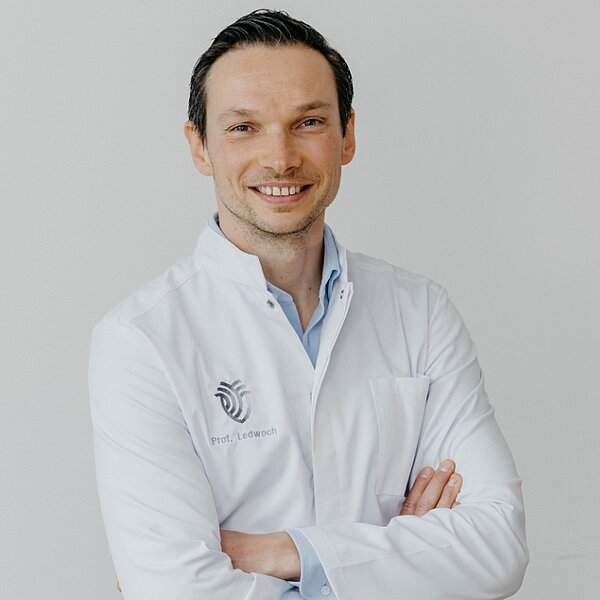
Moderne Medizin bedeutet für mich nicht nur, technisch auf dem neuesten Stand zu sein. Dazu gehört auch, mir Zeit zu nehmen, zuzuhören, alles verständlich zu erklären und gemeinsam die richtigen Entscheidungen für Ihre Gesundheit zu treffen.
Recognised certifications and partnerships with leading medical institutions reflect our commitment to the highest standards.







With raised cholesterol, lifestyle changes are not an optional extra but a central part of treatment. Numerous large studies show that targeted changes in diet, exercise, weight and sleep have measurable effects on LDL cholesterol, triglycerides, ApoB and vascular health. What matters is not short-term sacrifice, but lasting changes that fit into everyday life.
A heart-healthy diet can lower LDL cholesterol by 5–15%.
A Mediterranean-style diet is particularly effective, with:
It is not body weight alone but, above all, visceral (abdominal) fat that is closely linked to high cholesterol.
Even moderate weight loss of 5–10% of the starting weight can significantly improve cholesterol and triglycerides and reduce inflammatory processes. The aim is to maintain muscle mass while reducing metabolically active fat deposits, in order to prevent the yo-yo effect.
Regular physical activity has been shown to have a positive effect on cholesterol levels and vascular function.
Studies show that exercise:
A combination of endurance training and regular strength training is recommended. Training at the right individual intensity (aerobic threshold determined by a lactate test) is important – especially if you already have heart or vascular disease.
We only use medication that has been proven to reduce the risk of heart attack and stroke – never on the basis of a single lab value.
Related news
Total cholesterol above 200 mg/dl is considered raised; for triglycerides, the threshold is 150 mg/dl.
No, not in every case. Several large studies show that in people without vascular changes or increased cardiovascular risk, cholesterol-lowering medication brings no meaningful health benefit. We therefore do not prescribe medication reflexively; instead, we look at the condition of your blood vessels as well as your blood values, and then advise you on whether treatment is needed.
Targeted changes to diet and exercise can lower cholesterol to some extent – triglycerides respond particularly well. If levels are very high or the blood vessels are already significantly affected, medication is usually needed as well. We choose medications and doses that are usually well tolerated.
We go beyond standard tests: in addition to LDL and HDL, we measure ApoB, lipoprotein(a) and homocysteine. This gives us a precise picture of your individual vascular risk and shows how best to protect you.
 Termin online buchenHier klicken zum Öffnen
Anrufen089 2000 51470