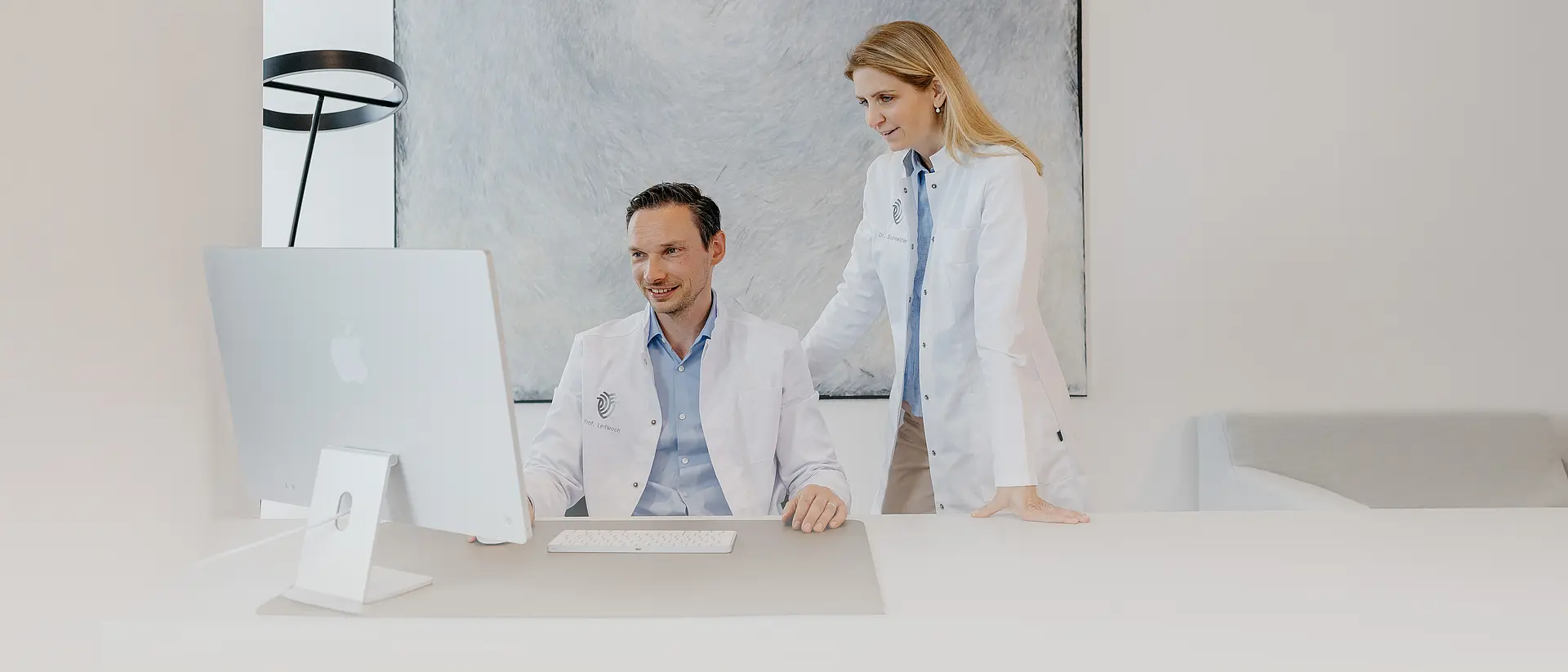

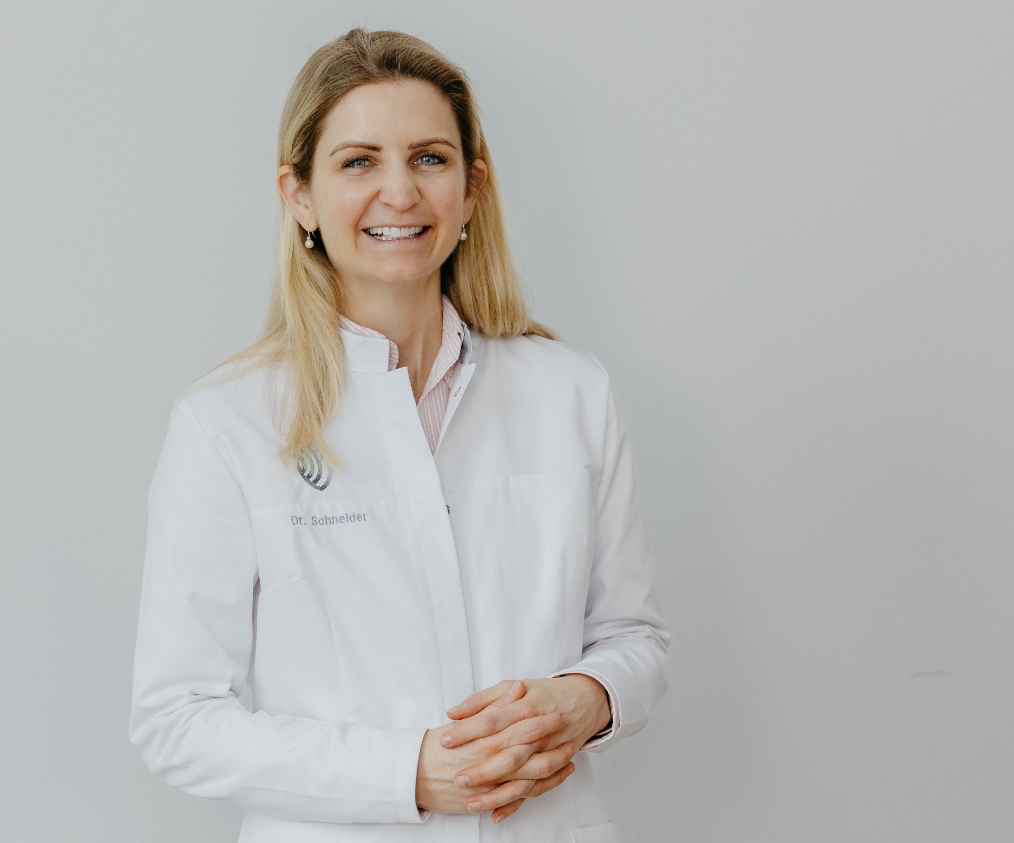
Mein Ziel ist, dass Sie sich medizinisch bestens betreut und persönlich gut aufgehoben fühlen - mit einem freundlichen Team, einer angenehmen Praxisatmosphäre und dem Gefühl, dass Ihr Anliegen ernst genommen wird.


Arrhythmias are often underestimated – until they cause complications.
Even mild symptoms such as occasional palpitations or reduced performance can be a sign of significant arrhythmias such as atrial fibrillation. At the Cardiology Centre Munich-Pasing, we can assess your symptoms precisely and decide whether treatment is needed.
An assessment is recommended if:
What matters is detecting arrhythmias early and treating them in line with the latest evidence – which is why a cardiology consultation is so important.
We combine established and digital methods.
Arrhythmias often have treatable causes. So it is essential not only to treat the heart rhythm, but also to address the triggers – this makes treatment far more successful.
Knowing the cause allows more targeted treatment – and lowers cardiovascular risk.
We are here for you
Mein Ziel ist, dass Sie sich medizinisch bestens betreut und persönlich gut aufgehoben fühlen - mit einem freundlichen Team, einer angenehmen Praxisatmosphäre und dem Gefühl, dass Ihr Anliegen ernst genommen wird.
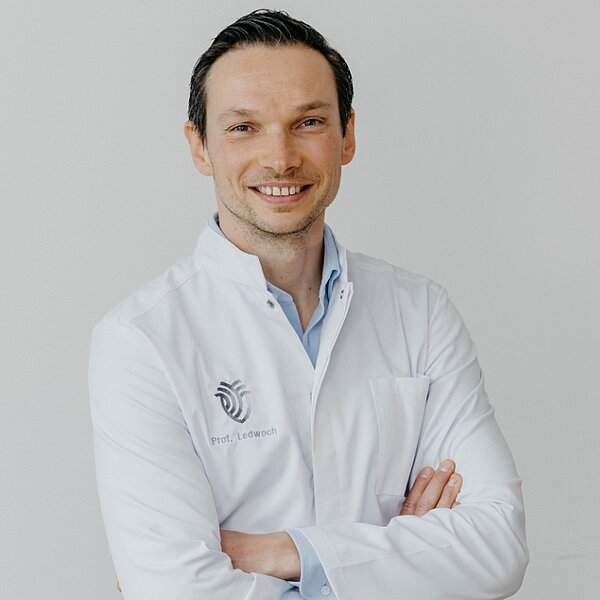
Moderne Medizin bedeutet für mich nicht nur, technisch auf dem neuesten Stand zu sein. Dazu gehört auch, mir Zeit zu nehmen, zuzuhören, alles verständlich zu erklären und gemeinsam die richtigen Entscheidungen für Ihre Gesundheit zu treffen.
Recognised certifications and partnerships with leading medical institutions reflect our commitment to the highest standards.



Medication can help to stabilise the heart rhythm or control the heart rate.
Individually tailored medication can significantly relieve symptoms such as palpitations, breathlessness or reduced fitness. We advise you in detail on the various medication options. Our aim is to find the most effective treatment with the best possible tolerability.
The key question is not whether ablation is possible – but whether it makes medical sense in your situation.
Ablation is a minimally invasive procedure, performed via a vein in the groin, in which faulty electrical pathways are precisely interrupted. Both frequent extra beats (extrasystoles) and atrial fibrillation can be treated this way. We work closely with leading cardiology clinics in Munich. If you need an ablation, we advise you thoroughly and take care of all the arrangements.
The most serious complication of atrial fibrillation is stroke. Modern blood thinners (oral anticoagulants) substantially reduce this risk.
We do not prescribe anticoagulation across the board, but decide individually based on your risk. In selected cases, anticoagulation can be reviewed – and even stopped – after a successful ablation.
We advise you on ablation techniques that combine maximum effectiveness with the highest level of safety.
For a long time, ablation was mainly used to relieve symptoms. Current studies show that early ablation improves long-term prognosis and reduces the risk of stroke and heart failure.
Regular exercise, weight loss, avoiding alcohol and good sleep reduce the recurrence rate of atrial fibrillation by up to 30–40%.
Structured follow-up with digital tools and telemonitoring also supports lasting success. Smartphones and wearables play an important role, enabling continuous monitoring and early detection of rhythm changes.
Related news
Palpitations are more likely to be serious if they occur together with dizziness, breathlessness, chest pain or reduced fitness. An assessment at our cardiology practice in Munich provides clarity.
With ECG, long-term ECG, smartwatch ECG and echocardiography – all possible in our practice.
Depending on the cause and stage, often yes: ablation or targeted medication can frequently restore a stable rhythm. Modern techniques such as cryoablation and pulsed field ablation (PFA) achieve success rates of 70 to 85%. In combination with a healthy lifestyle, many patients remain free of atrial fibrillation in the long term.
Ablation is a minimally invasive treatment for atrial fibrillation. Special catheters are guided via the groin to the heart, where the areas around the pulmonary veins that send out the irregular electrical signals are electrically isolated (usually with heat, cold or pulsed electric fields). The procedure requires no general anaesthetic and no incision, and most patients go home the next day.
Exercise, avoiding alcohol, better sleep and good blood pressure control have been shown to stabilise the heart rhythm. We advise you in detail on these lifestyle measures.
 Termin online buchenHier klicken zum Öffnen
Anrufen089 2000 51470