

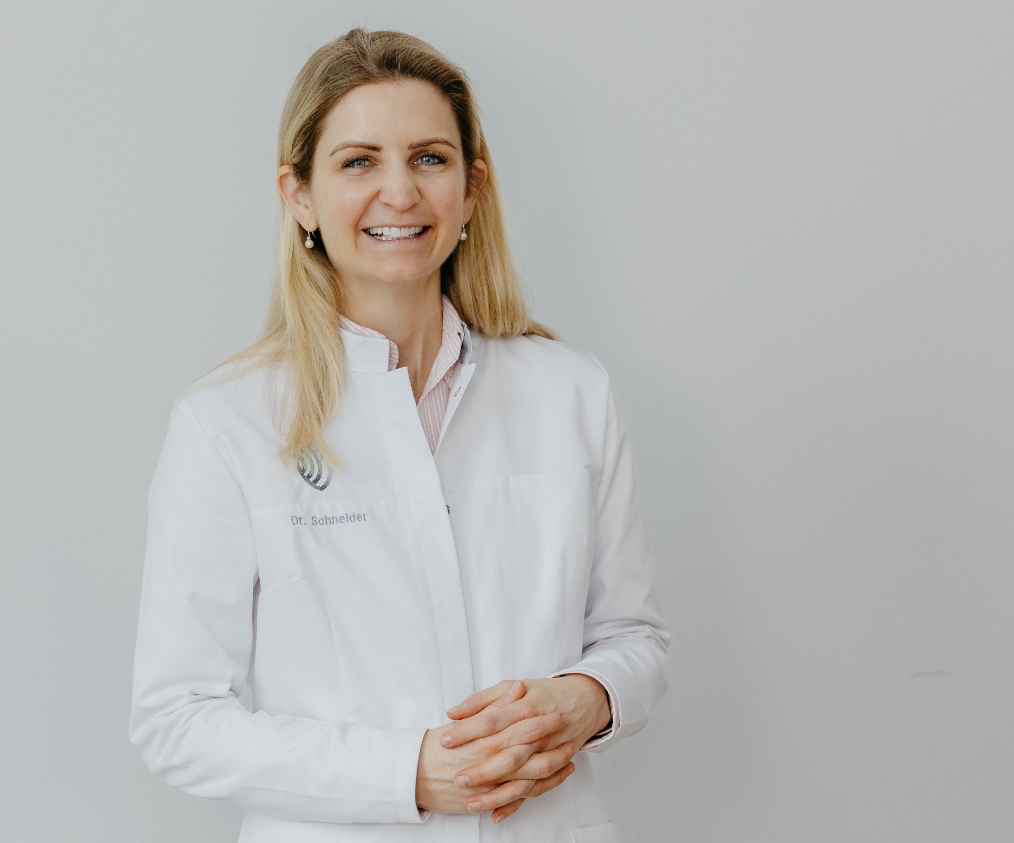
Mein Ziel ist, dass Sie sich medizinisch bestens betreut und persönlich gut aufgehoben fühlen - mit einem freundlichen Team, einer angenehmen Praxisatmosphäre und dem Gefühl, dass Ihr Anliegen ernst genommen wird.


Dr. Vera Schneider is a specialist in women’s cardiology. She has deepened her expertise with advanced studies in gender-specific medicine at the University of Zurich.
With a deep understanding of her patients’ individual needs, she supports women at every stage of life – from prevention to specialist diagnostics and treatment.
That is why a cardiac assessment tailored to women is so important.
The leading risk factors include:
We recommend a women-specific assessment in the following cases:
We take the time for a thorough, holistic assessment.
We are here for you
Mein Ziel ist, dass Sie sich medizinisch bestens betreut und persönlich gut aufgehoben fühlen - mit einem freundlichen Team, einer angenehmen Praxisatmosphäre und dem Gefühl, dass Ihr Anliegen ernst genommen wird.
Recognised certifications and partnerships with leading medical institutions reflect our commitment to the highest standards.




Pregnancy puts considerable strain on the cardiovascular system.
Complications occur in up to 10% of pregnancies and can have long-term implications for heart health.
Relevant complications include:
Menopause is a key turning point for women’s long-term heart health.
Many women experience the menopause as a time of upheaval. Yet while hot flushes and sleep problems are openly discussed, one danger often goes unseen:
cardiovascular risk. This includes:
For many women, the years between pregnancy and menopause are shaped by work, family and considerable mental strain.
From a cardiological perspective, this phase is often overlooked – which is exactly why preventive heart checks offer the chance to detect risks early, before disease develops.
In this phase, it is important to assess:
Drawing on gender medicine, we specifically record risk factors that affect women.
Alongside heart muscle and valve function, we pay particular attention to forms of heart failure that are more common in women.
Carotid ultrasound is an important non-invasive test for detecting arterial calcification (atherosclerosis) early.
We analyse the lipid profile, metabolic markers, hormones and cycle-related factors, among others.
Related news
Yes. In women, heart problems often present atypically – for example with breathlessness, nausea, back or jaw pain, severe fatigue or dizziness. That is why a targeted cardiac assessment is so important.
Hormonal changes can affect blood pressure, cholesterol, blood vessels and heart rhythm. New breathlessness, palpitations or reduced fitness should be checked by a cardiologist.
Yes. Particularly if you have known risk factors, have had pregnancy complications or are going through the menopause, an early assessment provides clarity and reassurance.
Falling oestrogen levels increase the risk of high blood pressure, lipid disorders and cardiac arrhythmias. Prevention is particularly effective at this stage of life.
Not in general. Modern transdermal preparations (patches or gels) usually do not increase cardiovascular risk and may even have a positive effect on blood pressure and cholesterol. Personal advice will give you certainty.
High blood pressure, arrhythmias or heart failure can occur – often without clear warning signs. Close monitoring can often avoid a hospital stay. You are of course welcome to bring your baby: we offer a calm atmosphere and space for feeding and changing.
 Termin online buchenHier klicken zum Öffnen
Anrufen089 2000 51470